Wednesday, February 27, 2019

Image result for pictures of fractionsImage result for pictures of fractionsFUN WITH FRACTIONS 


For this week's blog, I decided to focus on fractions because its this weeks focus in class.  In addition, when I was in school I never mastered the procedural and conceptual aspects of fractions.  Therefore, I feel this is a good opportunity for me to review fractions and stumble upon new strategies and concepts that will help me get a better understanding of fractions.  

If I were introducing and teaching the third grade about fractions, I would begin the lesson with an Essential Question such as What are Fractions?  Beginning the lesson with an essential question will allow students to recall information they may know or have previously learned. By doing so will give me a better idea of what needs to be taught; what strategies and concepts I will need to use in order to teach the topic.  Moreover, I will get a better understanding of how to scaffold the topic, so students can achieve mastery.  For those students that do not receive mastery, I will have to alter my lessons to accommodate those students needs.  

As stated above I will begin the lesson with an Essential Question: What are Fractions?  
I will give the students about five minutes to do a "Turn and Talk" to discuss a definition. Then I would ask one member from the group to come to the smart board and write down what they discussed.  Then, I would present them with the definition of a fraction.  

A fraction represents the part of a whole.  

 I would extend the discussion by utilizing this website as practice.  


Next, I would ask students to recall information they previously learned.  For example, what are numerator and denominator? Where are they placed in a fraction? 


Then, the students and I would have a discussion of what a fraction looks like.  At this point, I would turn the lesson from conceptual to procedural using actual pizza pies. 

How many parts of a whole pizza:

• the top number (the numerator) says how many parts we have.

• the bottom number (the denominator) says how many equal parts the whole is divided into
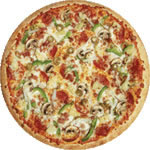
 Using actual pizza pies I would have the students set up fractions.  I would make 10 groups with two students in each group and ask who would like pizza.  As I am distributing pizza to the groups, the students and I would create fractions.  


Next, I would discuss fractions on a number line and would provide my students with a visual of fractions marked on a number line. 

Image result for fractions on a number line

Exit Ticket 
I would provide my students with paper and ask them to work with their accountability partners to make as many fractions out of the pizza pies that they can.  They will need to make the fraction,  make a visual of the fraction, and conclude with placing the fraction on the number line.    


Image result for fractions on a number line

Once the students complete the assignment successfully, they will be able to eat a slice of pie! 

Reflection:

For some students at this age, the actual conceptual and procedural aspect of fractions can be difficult.  However, by breaking the lesson down, recalling previous knowledge, scaffolding off that knowledge, and utilizing realistic visuals such as the pizza pie will engage the students and give students a better understanding of the purpose of fractions.  Also, having the students work in groups will allow the students to learn from each other.  Concluding with an exit ticket using the pizza pie by providing a shaded visual of a fraction, as well as placing the fraction on a number line will provide me with data of which students mastered fractions and who I need to continue working within small group instruction.   


Wednesday, February 20, 2019

Time is of the Essence

TIME IS OF THE ESSENCE 


This week, I have decided to focus my blog on telling time because I have observed a numerous amount of my students unable to tell time using analog. Reason being, technology has negatively influenced children's ability to tell time since they can just read the digital time off the screen of their phones.  When I spoke to other teachers about my concern, they informed me that most, if not all, of their students, cannot tell time as well. This concerns me because the procedural and conceptual fluency is provided to students in elementary school, particularly second or third grade.  Therefore, based on my observations it is obvious that students are not practicing their skills.  


When planning my lessons for the week, I would assign a book about time for each day of the week that I would read to my students prior to the math lesson.  My students and I would find vocabulary relating to telling time and add that to our vocabulary list for the math lesson.  I would provide them with a list of words relating to telling time. Words related to Telling Time


Next, I would use an anchor chart to provide my students with a visual of a clock that breaks down telling time-based on four quarters.  

TELLING TIME 2nd grade VOCABULARY visual.  I created this chart to illustrate and list the vocabulary terms associated with telling time.  Great visual to hang during the unit.

Next, I would provide my students with rhyming songs about the hour and minute hand since children have a tendency of getting the two confused.
We are working on telling time in first grade and I wanted to share this cute song in case anyone else is teaching time right now. This is another one of those songs that I have known forever but that I don't know the origins of- if it's yours let me know! We've been singing…

Thursday, February 14, 2019

Post #4

EQUIVALENT RATIOS

Common Core Standard: 6. RP. 3, 6. RP. 3a

        For this weeks topic, I chose to focus on equivalent ratios.  I was intrigued by the lesson that was taught to my students this week and I want to put my own spin on it.  So, this is more of a tweaked reteach.  I observed a few of my students having difficulty with this mathematical concept but overall most of them understood it.  

        Using the Three Act Task that we learned this week, I would begin the lesson by asking my students an essential question such as What is an Equivalent Ratio and when do we use them in real life? to engage them and see if I can recall prior knowledge.  I will give my students 6 minutes to discuss this topic with their accountability partners.  This will allow me to assist my students in drafting a definition and build their mathematical literacy skills.

Equivalent Ratio - can be written in two different ways, such as 2:10 is the same as 2/10.  Even though the ratio is written two different ways, the numbers express the same relationship.  Equivalent ratios are created by multiplying or dividing the numerator and denominator by the same number. 

I would then provide my students with a visual model of an Equivalent Ratio and ask them to make an inference about what they notice.  The students can work with their accountability partners to discuss their observations and make notes. 

 Image result for what are equivalent ratios

To give my students further understanding of the Equivalent Ratios, I would make them watch a video which would use a step by step strategy on how to solve for E.R. 


I would then have the students break into groups of two and work together on the Ratio matching game to help them get a better understanding of Equivalent Ratios and the concept.  

Ratios Matching Game


As my students are playing the game and working together, I would be walking around and observing the students make sure they are grasping the concept and strategies needed to solve.  If I notice some are having difficulties, I would work with them or make a small group to do a reteach.  

For those students who have grasped the concept, I would show them another way of figuring out how to find Equivalent Ratios is by using a table.  I would provide the students with another video that shows them how to use a table to find ER.


 Once I observe all students have an understanding I will assign group projects and make the children come up with their own problems and they will have to facilitate a lesson.  This will be their exit ticket and shows me they mastered the concept of ER.  

Reflection: Based on what I observed with my students and what I have researched there are numerous ways to compute mathematical problems.  However, educators my figure first reflect back on students previous knowledge, if there is any, to see what foundation they need to lay and scaffold from theirs.  Every student learns differently and not every concept will work for every student. It is best to provide them with numerous concepts and see which one they are the most comfortable with using to solve problems.  Then, have them repeat and reflect to show mastery.  


Thursday, February 7, 2019

Teaching Units of Measurement

Standard: 

CCSS.ELA-LITERACY.RI.3.1

Objective: 

   When I was in elementary school, one topic I had difficulty grasping was measurement. Thinking back, I don't understand why I had difficulty grasping such an easy topic.  There could be numerous reasons.  The only reason I can think of is that the teachers did not decipher one measurement from the other clearly and concisely.  They focused on all at them at once.  As we all know, this type of teaching can be overwhelming to all students.  So, I have decided to revisit units of Measurements.  I would particularly like to focus on the unit of measurement for the second and third grades.  If I were teaching this lesson, or should I say when there are many things I would do differently to make it engaging for my students.   One thing that I would do is I would choose a book that relates to units of measurement. (See pics below)


Lesson: 


I would have the children sit in a circle around me and once the story is complete, I would like to discuss the book and ask an essential question, "Why is measuring Important?"  
By providing my students with this essential question allows them to gain a deeper understanding of why learning to measure is so important in life.  Then I would ask them another question "What are some tools we use to measure with?"  This will allow me to hear what my students know and what they have to say about measurement tools.  Also, I can provide actual tools to show to the class.  This will provide students with visuals and tangible items for those who are visual and kinesthetic learners.  

Mini Lesson/Activity: 

Once we are done with the meeting time discussion, we will return to our desks and I will provide them with a hands-on lesson that will engage them and provide a deeper level of understanding because they will be physically measuring gummy worms.  (After they complete this task, I will provide them with gummies to eat).


This task will allow my students to recall previous knowledge of addition and subtraction (if they measure too much).  They will be able to draw an actual diagram of their worms to scale, which they will then present to classmates.

Activity 2

      Once my students master measurement using cm, meters, feet, and yards, I will move forward and teach my students the next unit of measurement quart, pint, and cups through the use of Gallon Man. 


I will have each of my students make their own Gallon Man use at school and at home.  

Reflection: 
As a future educator, I am trying to find ways to make math fun for my future students.  I want to make it realistic for them.  I know first hand how daunting math can be for some students, especially for those students that struggle, like myself.  I want to keep my students engaged. I believe students learn best from incorporating their learning styles as opposed to a lesson being procedural.  I believe that lessons should have a combination of learning styles and procedural methods incorporated into the lesson in order for it to be fun and engaging for all students.  Imagine being a student that just sits at their desk and listens to the teacher teach the lesson.  Kind of boring, right?  I grew up hearing from my teachers that learning is fun!  At the time, I used to think to myself what is so fun about learning.  Nowadays, I observe all the resources teachers are provided and wonder why couldn't I have this when I was in school.  Then,  I think to myself, oh when I become a teacher the fun I will have teaching!!!